The Person Next Door
Your champion is not your path to the deal. The person sitting next to your champion is.
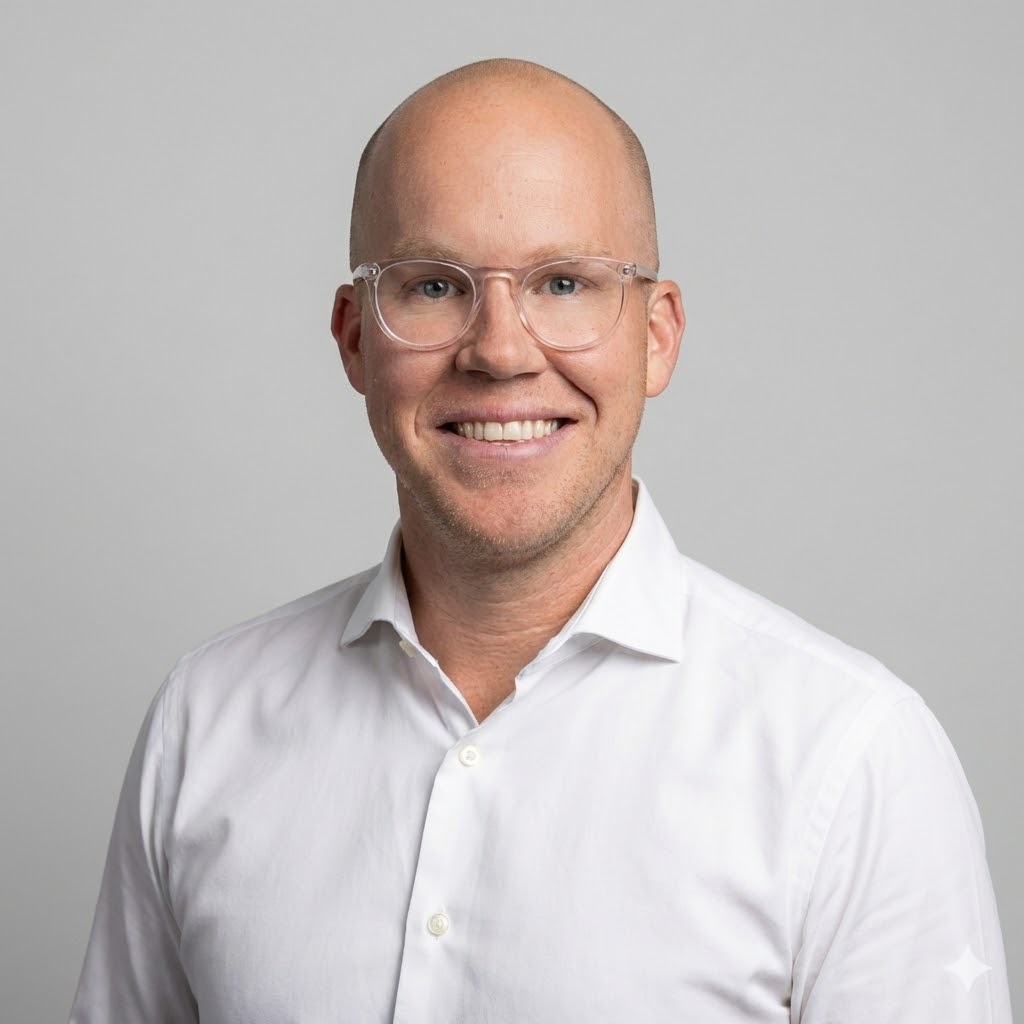
Ross Sylvester | Co-Founder & CEO | Feb 2026 | 14 min read | Deep Dive
My father has spent his career in medical affairs. For those unfamiliar, medical affairs sits between a pharmaceutical company and the physicians who prescribe its products. It is the function responsible for ensuring that the science behind a drug gets translated accurately to the people who use it. Not marketing. Not sales. Science.
One evening, we were sitting at Mountain Shadows in Paradise Valley -- the resort that backs up against Camelback Mountain, where the desert air cools enough in February that you can sit outside without thinking about it. He was describing a problem that had been consuming his team for months.
"We had a Key Opinion Leader," he said. "Brilliant researcher. Published extensively. Respected by every endocrinologist in the field. And for two years, we had been trying to get him to engage with our data. Not sell. Engage. Review the clinical evidence, attend an advisory board, share his perspective on the mechanism of action."
He paused.
"Nothing. Polite declines. Too busy. Schedule doesn't work. The answer was always no, delivered graciously."
I asked what changed.
"We stopped focusing on him. We started focusing on the person in the office next door."
What Pharma Knows That Sales Doesn't
The pharmaceutical industry has spent sixty years studying how influence moves through professional networks. Not theoretically. Empirically. With controlled studies, longitudinal data, and billions of dollars in outcomes riding on the results.
The concept they built their strategy around is the Key Opinion Leader -- a physician whose clinical expertise, research output, and peer credibility make them disproportionately influential in how other doctors practice medicine. KOLs don't just prescribe differently. They cause others to prescribe differently. Their influence propagates.
But the most important insight from six decades of KOL strategy is not about the KOL. It is about the network around them.
Coleman, Katz, and Menzel published Medical Innovation in 1966, tracking the adoption of tetracycline across four Midwestern cities.^1^ The study followed 125 physicians and measured precisely when each one began prescribing the new antibiotic. Their finding reshaped how the pharmaceutical industry thinks about influence: physicians who were well-connected -- who were named by colleagues as friends, discussion partners, or advisors -- adopted the drug months before their isolated peers. And the adoption didn't spread randomly. It followed the social network. The connected physicians adopted first, their close contacts adopted next, and the isolated physicians adopted last.
The drug itself didn't change. The evidence didn't change. What changed was who had already adopted. Influence moved through relationships, not through data.
This finding has been replicated dozens of times across therapeutic areas, geographies, and decades. Iyengar, Van den Bulte, and Valente analyzed the prescribing patterns of 181 physicians across three cities and found that contagion effects -- the direct influence of one physician on another's prescribing -- accounted for a significant share of new drug adoption, and that these effects were strongest among physicians who were socially connected.^2^ Nair, Manchanda, and Bhatia confirmed that physician opinion leaders directly influence the prescribing behavior of the physicians in their network.^3^
The mechanism is specific. It is not that KOLs give lectures and everyone listens. It is that KOLs have conversations -- in hallways, at conferences, over lunch, in the office next door -- and those conversations change what the people around them believe. The influence is relational. It is ambient. It operates through proximity and trust, not through authority and broadcast.
This is what my father understood. The KOL wasn't going to be persuaded by a slide deck or a data package. He was going to be persuaded by the colleague he trusted, who had already reviewed the data, who could say: "I looked at this. The mechanism is sound. You should see it."
The person next door.
Network Topology and Influence Propagation
Mark Granovetter published "The Strength of Weak Ties" in 1973 and changed how sociologists think about information flow.^4^ His insight was counterintuitive: the people who matter most for spreading new information are not your closest contacts. They are the acquaintances -- the people you see occasionally, who move in different circles, who bridge disconnected clusters in the social network.
Strong ties -- your close friends, your daily collaborators -- tend to know the same things you know. They reinforce existing beliefs. Weak ties connect you to new information because they sit in different parts of the network.
In the pharmaceutical context, this explains why KOL strategy evolved beyond simply engaging the most prominent researcher. The prominent researcher's close collaborators already knew what they knew. The real influence opportunity was in the weak ties -- the physician in a different department who respects the KOL but doesn't see them daily, the clinical researcher at a different institution who reads their publications but has never had a personal conversation.
Christakis and Fowler extended this in their analysis of the Framingham Heart Study, which tracked 12,067 people over 32 years.^5^ They found that behaviors and health outcomes spread through social networks up to three degrees of separation. If your friend's friend's friend becomes obese, your own risk of obesity increases. Not because of direct contact, but because norms, behaviors, and beliefs propagate through network connections in ways that transcend individual relationships.
The implications for any influence strategy are profound. You are not just influencing the person you talk to. You are influencing the people they talk to, and the people those people talk to. The network amplifies -- or attenuates -- every interaction.
The B2B Buying Committee Is a Network, Not a List
Enterprise sales has always talked about buying committees. The standard approach is to identify the stakeholders, map their roles (economic buyer, technical evaluator, end user, champion), and engage each one.
This is list thinking. It treats the buying committee as a collection of individuals with independent preferences.
Network thinking is different. It treats the buying committee as a system of relationships where influence flows along specific pathways, and where the outcome is determined not by what each individual thinks, but by how influence propagates between them.
Gartner surveyed 632 B2B buyers in 2024 and found that 74% of buyer teams demonstrate "unhealthy conflict" during the decision process.^6^ That conflict is not random noise. It is the result of influence flowing through the network -- different stakeholders receiving different signals from different sources, forming preferences that collide when the group attempts to reach consensus.
The same Gartner research found that content framed around group relevance improves consensus by 20%, while content tailored to individual perspectives damages consensus by 59%.^6^ This is the network effect at work. When you send the CFO a financial justification and the CTO a technical architecture doc and the VP of Ops an implementation timeline, each one forms a preference in isolation. When they convene, they have three separate frameworks for evaluating the same decision. Conflict is inevitable.
But when you help the buying committee develop a shared understanding -- when you equip one person to explain the value case in terms that resonate with the person next to them -- the influence propagates constructively. Consensus forms because the network is carrying a coherent signal.
This is exactly what pharma learned with KOLs. The advisory board that worked was not the one where a brilliant physician presented to a passive audience. It was the one where three or four physicians discussed the evidence with each other, in the KOL's presence, and arrived at a shared interpretation. The KOL's role was not to convince. It was to anchor the discussion around which consensus could form.
The Influence Node Model
My father's team eventually mapped the KOL's network. Not just who he worked with, but who he talked to about clinical decisions, who he consulted on complex cases, whose opinions he valued. They identified a specific colleague -- a younger physician in the adjacent office who had trained under the KOL, who shared patients with him, who had informal conversations with him multiple times per week.
They engaged the colleague. Not with a pitch. With the data. They invited her to review the clinical evidence, attend a small advisory board, ask questions, form her own opinion. Over six months, she became genuinely knowledgeable about the mechanism of action and the supporting evidence.
Then something happened that no direct outreach to the KOL could have achieved. She mentioned the data in a hallway conversation. The KOL asked a follow-up question. She answered it with the specificity that comes from genuine engagement, not from being handed a slide deck. Two weeks later, the KOL accepted an advisory board invitation.
The influence didn't flow from the company to the KOL. It flowed from the company to a trusted node in the KOL's network, and then from that node to the KOL through a channel of pre-existing trust.
This is the model:
-
Identify the target node. The person whose engagement or endorsement would change the trajectory of the deal, the adoption, the decision.
-
Map the influence network around them. Not the org chart. The actual network of trust, consultation, and informal communication.
-
Find the adjacent node. The person who has frequent, trusted access to the target. Who do they eat lunch with? Who do they ask questions when they're uncertain? Who sits in the office next door?
-
Invest in the adjacent node. Not with a pitch. With genuine value -- information, insight, access -- that makes the adjacent node knowledgeable and credible on the topic.
-
Let the network do the work. The adjacent node will carry the message through channels that no outsider can access. Not because they were asked to, but because that is what people do with interesting, relevant information: they share it with the people they trust.
Why This Changes How You Sell
The conventional enterprise sales approach is direct. Find the economic buyer. Get the meeting. Make the case. Close.
When that fails -- and it fails often -- the next move is to find a champion. Someone inside the account who believes in the solution and will sell internally on your behalf.
But the champion strategy has a structural limitation that we documented in "The Champion's Paradox": champions are constrained by their own network position. A mid-level champion with limited access to the C-suite can be enthusiastic, informed, and committed -- and still unable to move the deal. Their influence doesn't reach the nodes that matter.
The KOL model offers a different strategy. Instead of asking "who is my champion?", ask "who does my target trust?" Then invest in that person.
Ebsta and Pavilion analyzed 655,000 opportunities and found that engaging six or more stakeholders early boosted win rates from 12% to over 40%.^7^ But it is not just the number of stakeholders that matters. It is which stakeholders, and how they connect to each other.
UserGems found that single-threaded deals -- where your entire relationship runs through one person -- have a 5% win rate.^8^ Multi-threading to five contacts raises that to 30%. But the value of multi-threading is not just redundancy. It is network coverage. Five contacts who all report to the same VP give you five points of contact with the same influence cluster. Five contacts who span three departments and two levels of seniority give you access to the entire influence topology of the buying committee.
The KOL model says: map the topology first. Find the nodes that connect clusters. Invest in those nodes. Let influence propagate.
The Three-Degree Rule in Enterprise Sales
Christakis and Fowler's three-degree rule -- that influence propagates through up to three degrees of social separation -- has a direct application in enterprise sales.^5^
When you engage a stakeholder in a deal, you are not just influencing them. You are influencing everyone they talk to about the decision (degree one), everyone those people talk to (degree two), and -- in large, complex organizations -- the people at degree three.
This means that the choice of which stakeholder to engage first is not just about that person's authority or role. It is about their network position. A stakeholder at the center of the influence network -- someone who interacts with multiple departments, who is consulted by peers, who carries credibility across organizational boundaries -- amplifies your message more than a senior executive who sits in a corner office and talks primarily to their direct reports.
In pharma, this is why medical affairs teams invest in "rising stars" -- physicians who may not yet be the most published or prominent, but who are highly connected, frequently consulted, and positioned at network intersections. The return on engaging a rising star is often higher than the return on engaging an established KOL, because the rising star's network position creates more propagation opportunities.
In enterprise sales, the equivalent is the cross-functional leader: the Director of Revenue Operations who talks to sales, marketing, finance, and the C-suite. The head of the evaluation committee who coordinates across departments. The VP who just moved from one division to another and maintains relationships in both. These are the network nodes that, when engaged effectively, carry influence farther and faster than any org chart position would predict.
Practical Application: The Influence Map
Here is how to apply the KOL model to your next enterprise deal.
Step 1: Draw the Network, Not the Org Chart
The org chart tells you who reports to whom. The influence map tells you who trusts whom. They are different.
Ask your existing contacts: "When a decision like this comes up, who does [target executive] typically consult? Who do they listen to outside their direct team? Who have they worked with the longest?"
Cross-reference with meeting patterns (who attends the same meetings?), email threads (who is cc'd on communications about this initiative?), and LinkedIn connections (who shares professional history?).
Step 2: Identify the Bridge Nodes
Look for people who connect otherwise separate clusters. The engineering manager who also has a strong relationship with the CFO. The VP of Sales Ops who bridges the gap between the CRO and the COO. The board member who is also an advisor to the CEO.
These bridge nodes are the most valuable targets for influence, because they carry information between groups that would otherwise remain isolated.
Step 3: Invest in the Node, Not the Message
The biggest mistake in influence strategy is treating the intermediary as a conduit for your message. That is not influence. That is using someone as a carrier pigeon.
Real influence investment means making the bridge node genuinely knowledgeable. Share research. Include them in technical discussions. Give them access to your product team. Let them form their own informed opinion. When they carry a message to the target node, they carry it with the conviction that comes from understanding, not from being told what to say.
Step 4: Create Shared Context
The most powerful move in the KOL model is creating situations where the target and the bridge node are in the same room, engaging with the same information. In pharma, this is the advisory board -- a small group of physicians discussing evidence together, with the KOL and the adjacent nodes forming their opinions simultaneously, in dialogue.
In enterprise sales, this is the executive briefing, the technical workshop, the strategic review -- any format where multiple stakeholders engage with the same material and reach conclusions together. The conclusions reached in shared context are dramatically more durable than those reached in isolation.
What My Father Taught Me About Patience
The KOL strategy my father described took eight months from the first engagement with the adjacent physician to the KOL's first advisory board. Eight months.
In enterprise sales, where quarterly pressure compresses every timeline, eight months sounds like failure. But my father's perspective was different. "Two years of direct outreach produced nothing," he said. "Eight months of network strategy produced a relationship that lasted a decade."
The KOL didn't just attend one advisory board. He became a long-term scientific collaborator. He reviewed data. He published papers that referenced the mechanism. He spoke at conferences. His endorsement propagated through the entire therapeutic area, influencing hundreds of physicians over years.
That is the compounding return of network-aware influence. A direct ask, even when it succeeds, produces a transaction. A network-aware approach produces a relationship that generates value long after the initial engagement.
In B2B sales, the parallel is exact. A deal closed through direct pressure is a transaction. A deal closed through network influence -- where multiple stakeholders genuinely understand the value, where the champion emerged organically from informed engagement, where the economic buyer heard about the solution from someone they trust -- is the beginning of an expansion, a reference, a multi-year partnership.
The person next door is never the fastest path to a deal. But they are the path that compounds.
The Lesson From Paradise Valley
The desert cools quickly in February. By the time my father finished the story, the sun had dropped behind Camelback and the temperature had shifted from warm to sharp. The kind of evening where you notice the transition.
What stayed with me was not the tactical playbook. It was the underlying principle: influence is a property of networks, not individuals. The most effective influence strategy is not to find the right person and persuade them. It is to understand the system of trust and communication in which they operate, identify the node that connects you to them, and invest in that node with genuine value.
In pharma, they call this KOL engagement. In network science, they call it strategic seeding. In enterprise sales, we do not have a name for it yet. We should.
Every deal has a person next door. The stakeholder your target trusts more than they trust you. The colleague whose opinion carries more weight than any pitch deck. The network node that, when activated, carries your message through channels you cannot access directly.
Find that person. Invest in them. Give them the knowledge and conviction to carry the message on their own terms. Then let the network do what networks do.
My father understood this from thirty years in medical affairs. The best sellers understand it intuitively. But very few revenue organizations have built systems to identify, map, and activate influence networks at scale. That is the opportunity. The companies that figure it out will not just close more deals. They will build the kind of durable, network-driven revenue advantage that compounds over years.
Thank you, Dad. The lesson from Mountain Shadows was worth more than any sales book on my shelf.
Based on sixty years of pharmaceutical KOL research, network science from Coleman to Christakis, and the buying committee dynamics documented across our research library.
Endnotes
^1^ Coleman, James S., Katz, Elihu, and Menzel, Herbert. Medical Innovation: A Diffusion Study (Bobbs-Merrill, 1966). Tracked the adoption of tetracycline by 125 physicians across four cities. Found that socially connected physicians adopted new drugs significantly earlier than isolated physicians, and that adoption spread along social network ties.
^2^ Iyengar, Raghuram, Van den Bulte, Christophe, and Valente, Thomas W. "Opinion Leadership and Social Contagion in New Product Diffusion." Marketing Science 30, no. 2 (2011): 195-212. Analyzed prescribing patterns of 181 physicians and found significant contagion effects in drug adoption, strongest among socially connected physicians.
^3^ Nair, Harikesh S., Manchanda, Puneet, and Bhatia, Tulikaa. "Asymmetric Social Interactions in Physician Prescription Behavior." Journal of Marketing Research 47, no. 5 (2010): 883-901. Demonstrated that physician opinion leaders directly influence the prescribing behavior of physicians in their network.
^4^ Granovetter, Mark S. "The Strength of Weak Ties." American Journal of Sociology 78, no. 6 (1973): 1360-1380. Foundational paper demonstrating that weak ties (acquaintances) are more important than strong ties (close friends) for transmitting new information across social networks.
^5^ Christakis, Nicholas A., and Fowler, James H. "The Spread of Obesity in a Large Social Network over 32 Years." New England Journal of Medicine 357, no. 4 (2007): 370-379. Analyzed 12,067 people in the Framingham Heart Study and found that behaviors spread through social networks up to three degrees of separation.
^6^ Gartner, Inc. Survey of 632 B2B buyers (August-September 2024). 74% of buyer teams demonstrate unhealthy conflict during the decision process. Content framed for group relevance improves consensus by 20%; individual-perspective content damages it by 59%. See: Gartner Sales Survey Finds 74% of B2B Buyer Teams Demonstrate "Unhealthy Conflict."
^7^ Ebsta/Pavilion, "2025 GTM Benchmarks." Based on 655,000 opportunities. Engaging 6+ stakeholders early boosted win rates from 12% to 40%+. See: 2025 GTM Benchmarks.
^8^ UserGems, multithreading analysis of 500 closed-won and closed-lost opportunities. Single-threaded deals have a 5% win rate; multi-threaded deals with five contacts have a 30% win rate. See: How Much Is Multithreading Worth to Your Pipeline and Revenue?