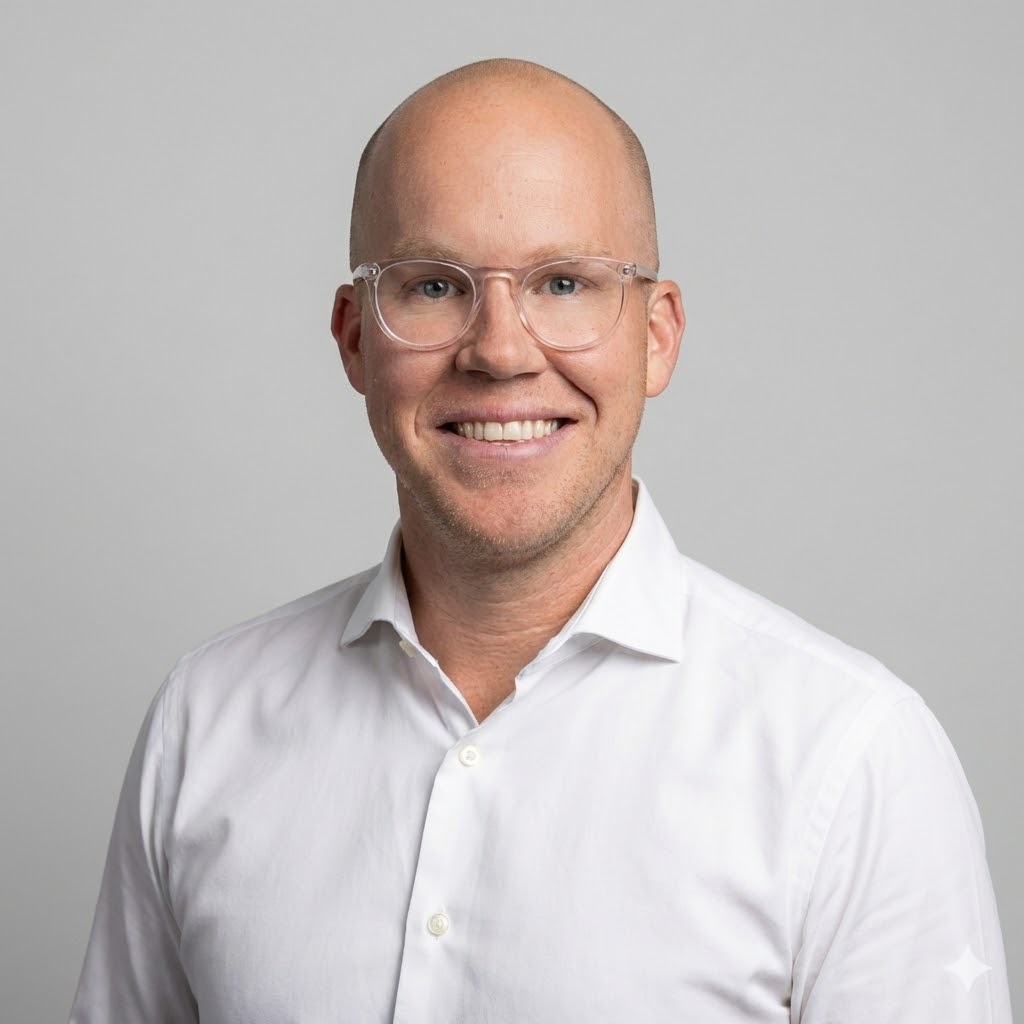
Larry Ellison
Ross Sylvester, Co-Founder & CEO, Adrata | Feb 2026 | ~7 min read
In 1977, a twice-divorced college dropout put $1,200 into a company called Software Development Laboratories. His co-founders kicked in another eight hundred bucks. Their target was a market controlled almost entirely by IBM, which held roughly 80% share and had just dismissed its own researcher's breakthrough -- the relational database model -- as an "intellectual curiosity." The dropout thought IBM was wrong about its own invention. He shipped a working product before they did.
That dropout was Larry Ellison. The company became Oracle. Today it does $57 billion in annual revenue, and Ellison's net worth has touched $393 billion, briefly making him the richest person on earth. Three major books have been written about him -- Softwar, The Difference Between God and Larry Ellison, and Everyone Else Must Fail -- and each one reads like a different genre. A leadership manual. A cautionary tale. A war story.
For CROs and revenue leaders, Ellison's career is not just interesting. It is instructive. Almost every strategic mistake and breakthrough in modern enterprise sales has an Oracle chapter.
The 1990 Crash: A Revenue Quality Masterclass
If you study only one chapter of Oracle's history, make it this one.
By the late 1980s, Oracle was growing at 30-40% annually with revenue exceeding $130 million. The sales culture was legendarily aggressive. Reps had no cap on compensation. You hit quota or you were gone. There was no middle ground.
The problem was what the culture incentivized underneath the numbers. Oracle's sales organization was booking revenue on deals that hadn't truly closed -- recognizing future revenue up front, signing contracts with return clauses that let customers walk. The pipeline looked extraordinary. The cash didn't follow.
On Halloween 1990, Oracle's stock collapsed to $4.88 a share. Ellison's personal fortune fell from $954 million to $164 million in months. In 1991, Oracle posted a $36 million loss and cut 10% of its workforce. The company came within striking distance of bankruptcy.
Ellison survived by doing what most founders resist: he fired the executives who had built the culture that nearly killed the company, overhauled accounting procedures, and brought in operational discipline. By 1992, Oracle 7 put the company back at the forefront. By 1994, the market cap had recovered to $200 billion.
The CRO lesson is direct. The 1990 crisis was caused by a sales organization that optimized for bookings over revenue quality. Pipeline metrics looked great. The underlying revenue was hollow. Every CRO managing aggressive growth targets should internalize the difference between the numbers your dashboard shows and the cash your company actually collects.
The Sales Culture That Built an Industry
Oracle's near-death experience did not make Ellison timid. It made him more precise. The sales culture that emerged from the restructuring became arguably the most influential in enterprise software history.
A few elements that CROs should study:
No cap on compensation. If a single rep was the highest-paid person at Oracle, Ellison was fine with it. The message was unambiguous: production is what matters, and we will pay whatever it costs to keep producers.
The founder closed the feedback loop. Ellison was known for telling the sales team to bring him every objection they couldn't overcome. He would then work with the product team to build solutions based on real sales friction. Most companies still fail to close this loop between the field and the product roadmap. Oracle institutionalized it.
The training program was the product. Oracle's sales development program became known as an Ivy League education for reps. The alumni network speaks for itself: Marc Benioff spent 13 years there before founding Salesforce. Tom Siebel left to build Siebel Systems. Countless VPs of Sales across the tech industry carry Oracle DNA.
The philosophy Ellison instilled was captured perfectly in the title of Karen Southwick's book: Everyone Else Must Fail. Competition at Oracle was not a strategy applied situationally. It was identity. "It's not enough that we win," Ellison said. "All others must lose."
The Acquisition Era: Buying What You Cannot Sell
In 2003, Ellison publicly predicted that roughly 1,000 tech companies would disappear in a wave of consolidation, leaving a few category killers. Then he decided to be the one swinging the blade.
PeopleSoft came first -- an $10.3 billion hostile takeover in 2004 that took 18 months, a DOJ investigation, and a courtroom victory to close. Wall Street was appalled. Ellison didn't care. The deal transformed Oracle from a database company into a full-spectrum enterprise software provider.
Siebel Systems followed in 2006 for $5.85 billion, instantly making Oracle the number-one CRM company in the world. Then BEA Systems for $8.5 billion. Then the deal most observers called insane: Sun Microsystems for $7.4 billion in 2010. The consensus was that Ellison had overpaid for a declining hardware business. What he actually bought was control of Java and the ability to build engineered systems -- a full-stack strategy that now underpins Oracle Cloud Infrastructure.
The strategic logic is worth internalizing. Each acquisition increased Oracle's total switching costs. Customers weren't locked into the database alone. They were locked into an ecosystem -- HR, CRM, middleware, hardware, and the data model connecting everything. Switching costs, not features, are the recurring revenue engine. Feature competition is a treadmill. Ecosystem competition is a moat.
The Cloud Pivot: When You're Late, Redefine the Race
In 2008, at an analyst conference, Ellison mocked cloud computing with memorable contempt: "Maybe I'm an idiot, but I have no idea what anyone is talking about. What is it? It's complete gibberish. It's insane."
By the time Oracle launched OCI in 2016, AWS had a decade head start. Azure was entrenched. Google Cloud was scaling. Few took Oracle's cloud seriously.
Here is where Ellison's pattern becomes recognizable. In 1995, he proposed the Network Computer -- a cheap, thin-client device that ran applications from network servers. The product failed. But the vision was cloud computing, described perfectly, a decade early. In 1998, he predicted people would "rent all their software, not own it." The exact SaaS model.
Being right about the destination and wrong about the timing is survivable -- if you learn from it. Ellison did not try to out-AWS Amazon on breadth. Oracle competed on price-performance for specific workloads, particularly databases and AI. By Q2 FY2026, Oracle's IaaS revenue was growing at 68% year-over-year, cloud revenue hit $8 billion in a single quarter, and remaining performance obligations reached $138 billion (up 41% YoY). Over 75% of Oracle's revenue now comes from cloud services.
Then came the multicloud pivot. For decades, Oracle's strategy was lock-in. Now, Oracle Database runs on Azure, AWS, and Google Cloud, with multicloud revenue growing at a 1,529% pace. "The clouds are becoming open," Ellison declared at CloudWorld. The smartest move is converting lock-in into ubiquity. "You can't leave" becomes "you don't need to leave because we're everywhere you need to be."
The Stargate Bet and the AI Thesis
On January 21, 2025, President Trump announced the Stargate Project from the White House -- a $500 billion joint venture between OpenAI, Oracle, SoftBank, and MGX. Oracle's partnership with OpenAI alone exceeds $300 billion over five years.
The debut site in Abilene, Texas, is already operational: 450,000 NVIDIA GB200 GPUs, 1.2 gigawatts of power, eight interconnected buildings across 1,000 acres.
Ellison's AI thesis, laid out at Oracle AI World 2025, is characteristically blunt. Training models on public internet data is the "dawn of a new era." But the real prize is AI that reasons on private enterprise data without compromising security. Oracle's AI Database and Data Platform are designed to let any model securely access private data through retrieval-augmented generation.
At 81, Ellison is making the largest infrastructure bet of his career. He has been wrong about timing before. His pattern is to be right about the destination.
What CROs Should Take From Ellison
Five lessons, distilled:
1. Revenue quality kills more companies than revenue quantity. Oracle's 1990 crash was caused by a sales organization that looked great on paper and was hollow underneath. Audit the gap between your pipeline metrics and your actual collected revenue. If those numbers are diverging, you have a 1990 problem.
2. Close the loop between the field and the product. Ellison personally collected objections from his sales team and turned them into product roadmap items. Most companies funnel feedback into a black hole. The ones that convert sales friction into product features compound their advantage every quarter.
3. Sell systems, not products. Every Oracle acquisition increased total switching costs. The more of a customer's infrastructure you touch -- training, integration, data, workflow, outcomes -- the more predictable your revenue. Feature competition is a race you run forever. Ecosystem competition is a position you hold.
4. Being late is not fatal if you find the right wedge. Oracle entered cloud a decade behind AWS. It didn't try to compete everywhere. It found the subsegment -- database and AI workloads -- where it had a structural advantage. A CRO entering a crowded market should do the same: don't fight the entire war, win the battle where your advantage is undeniable.
5. Convert lock-in to ubiquity before customers convert it to resentment. Oracle's multicloud pivot took its greatest strategic asset -- the embedded database -- and made it available everywhere. The strongest moats evolve from "you can't leave" to "you don't want to leave." Revenue leaders who wait for customers to demand freedom will lose it on the customers' terms, not their own.
Ellison once said, "I have had all of the disadvantages required for success." Adopted at nine months. College dropout. A $1,200 bet against IBM. Acquisitions that looked reckless at the time and obvious in retrospect. A cloud pivot that started with public mockery and ended with a $500 billion AI partnership.
The throughline is not luck or genius. It is a specific kind of stubbornness -- the willingness to be wrong about timing while being relentlessly right about where the market is going. For CROs navigating their own version of this tension -- between quarterly targets and long-term positioning, between aggressive growth and revenue integrity, between locking customers in and earning their loyalty -- Ellison's five decades offer the full playbook. Both the wins and the warnings.